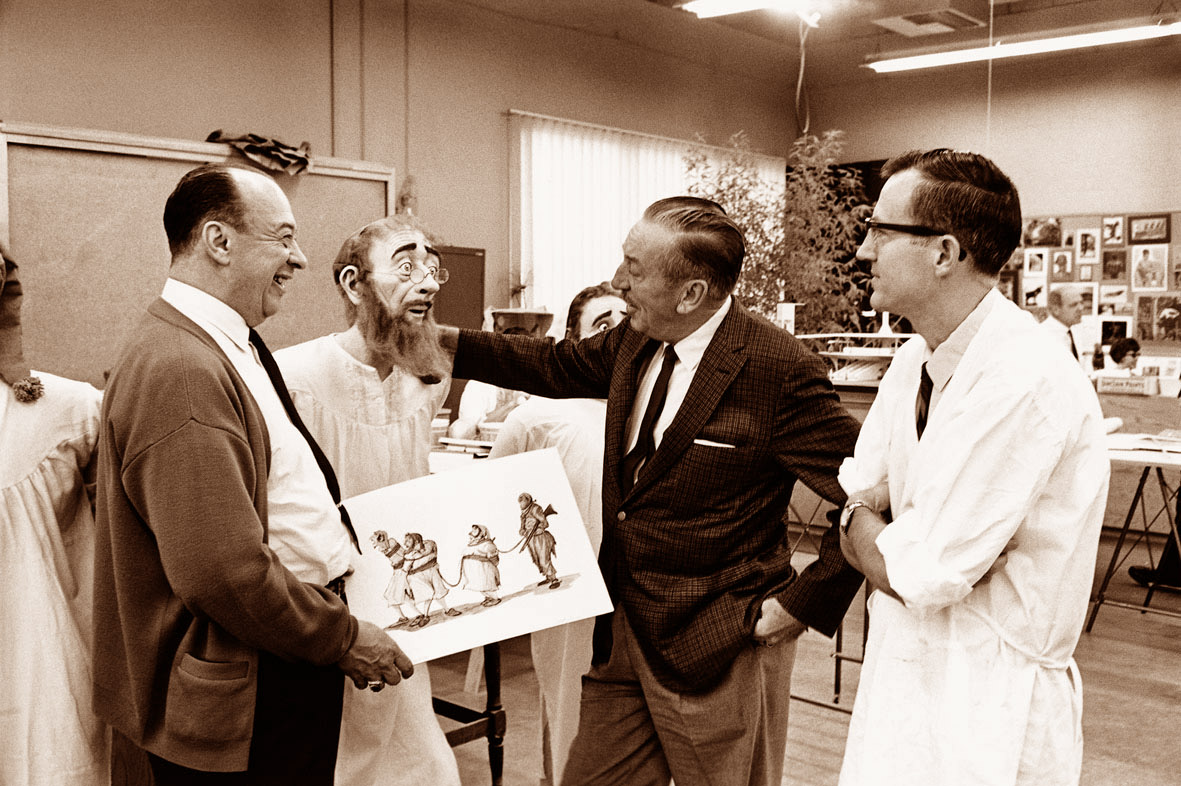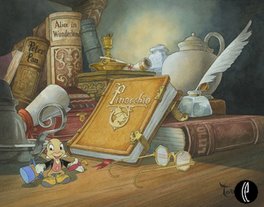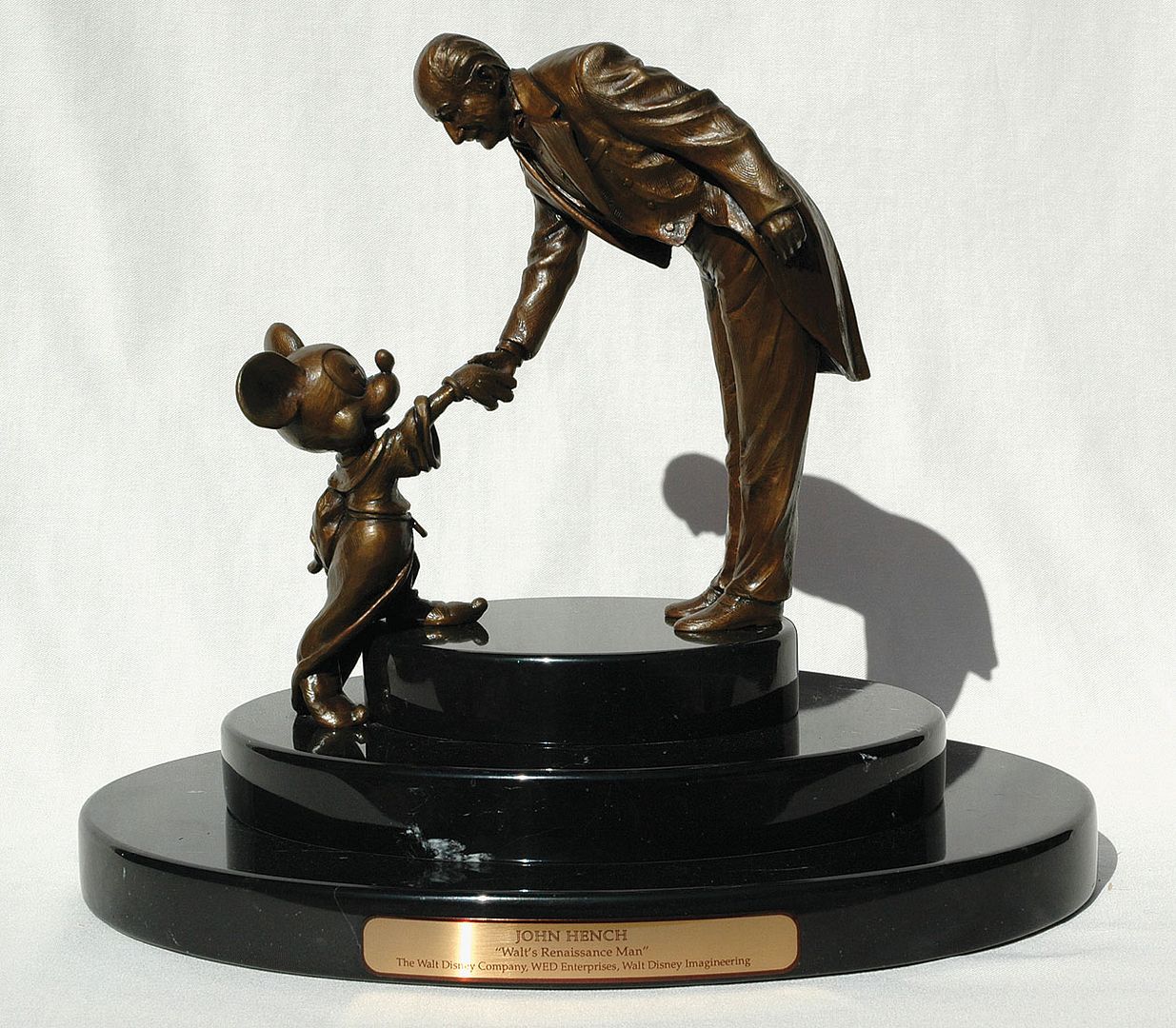
Disney legendary artist and Imagineer John Hench was hired by Disney in May 1939 to work as a sketched artist and quickly moved to background painting for Fantasia and later Dumbo. He then joined the layout team on The Three Caballeros and Fun and Fancy Free, served as art director on Make Mine Music, did color and styling for The Adventures of Ichaboad and Mr. Toad , Cinderella, Alice in Wonderland and Peter Pan, developed the cartoon art treatment for combining live action and animation in So Dear to My Heart, created animation effects for The Living Desert , lead title special effect credits for the Academy Award winning movie 20,000 Leagues Under the Sea, worked with Salvador Dali on the animated short project Destino and moved to WED (now known as Walt Disney Imagineering) in 1954.
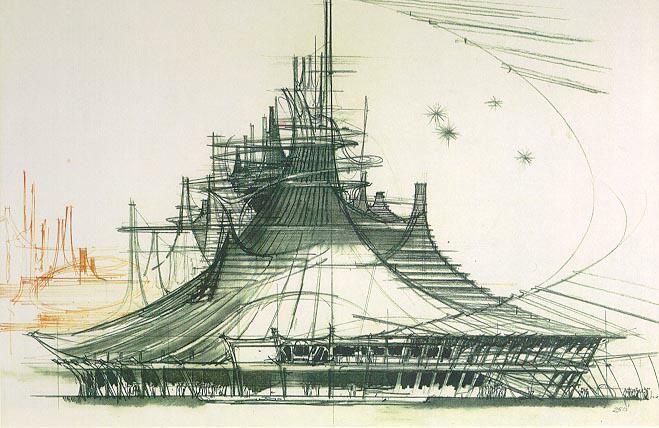
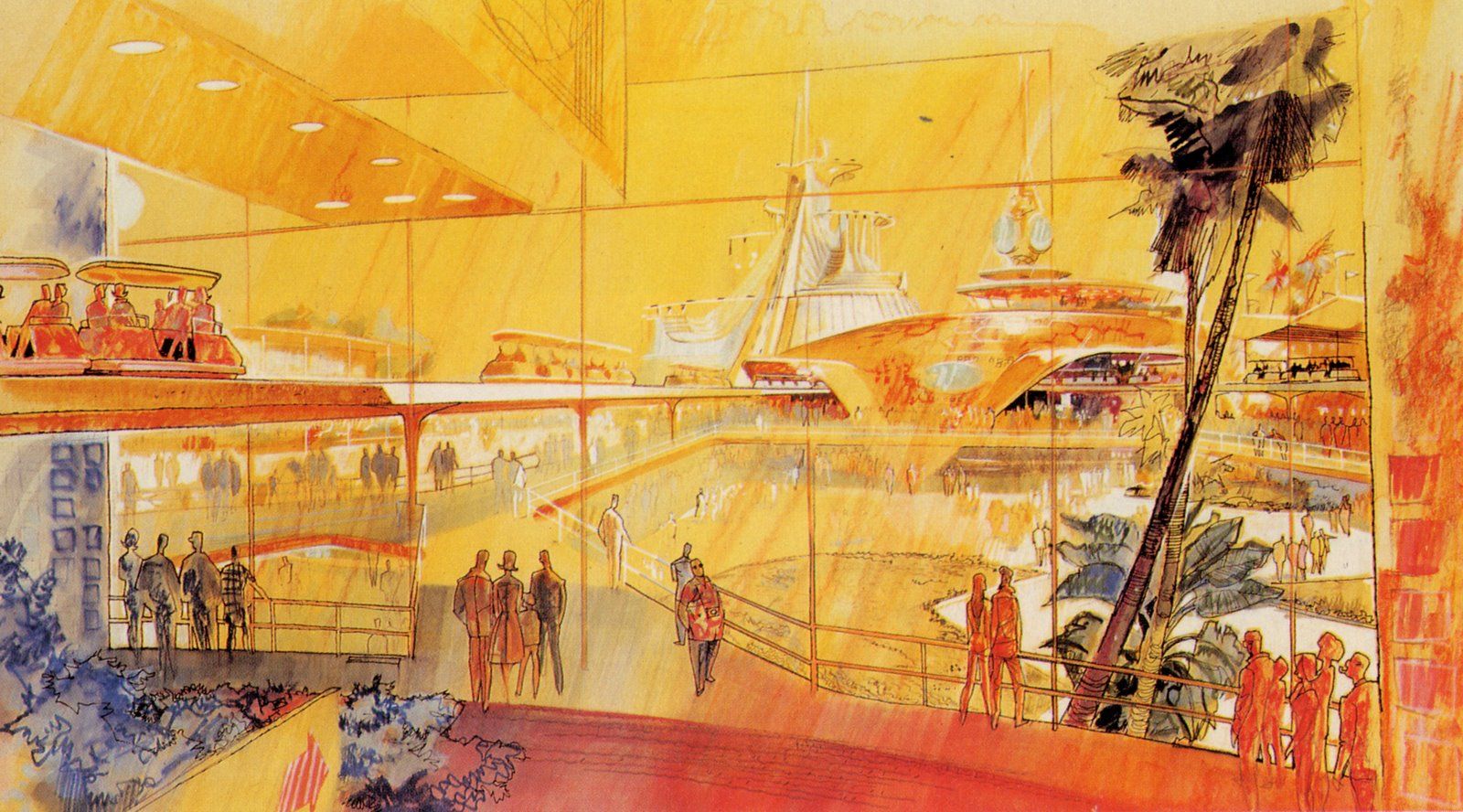
While at WED, John was first involved in the creation of Tomorrowland for Disneyland and then worked, among other projects, on the organisation of the 1960 ceremonies for the Winter Olympics, on Disney's contributions to the 1964 World Fair, and on Space Mountain. John also lead WED from 1972 to 1982 as Executive Vice President, and remained till 2004 WDI's "color guru".
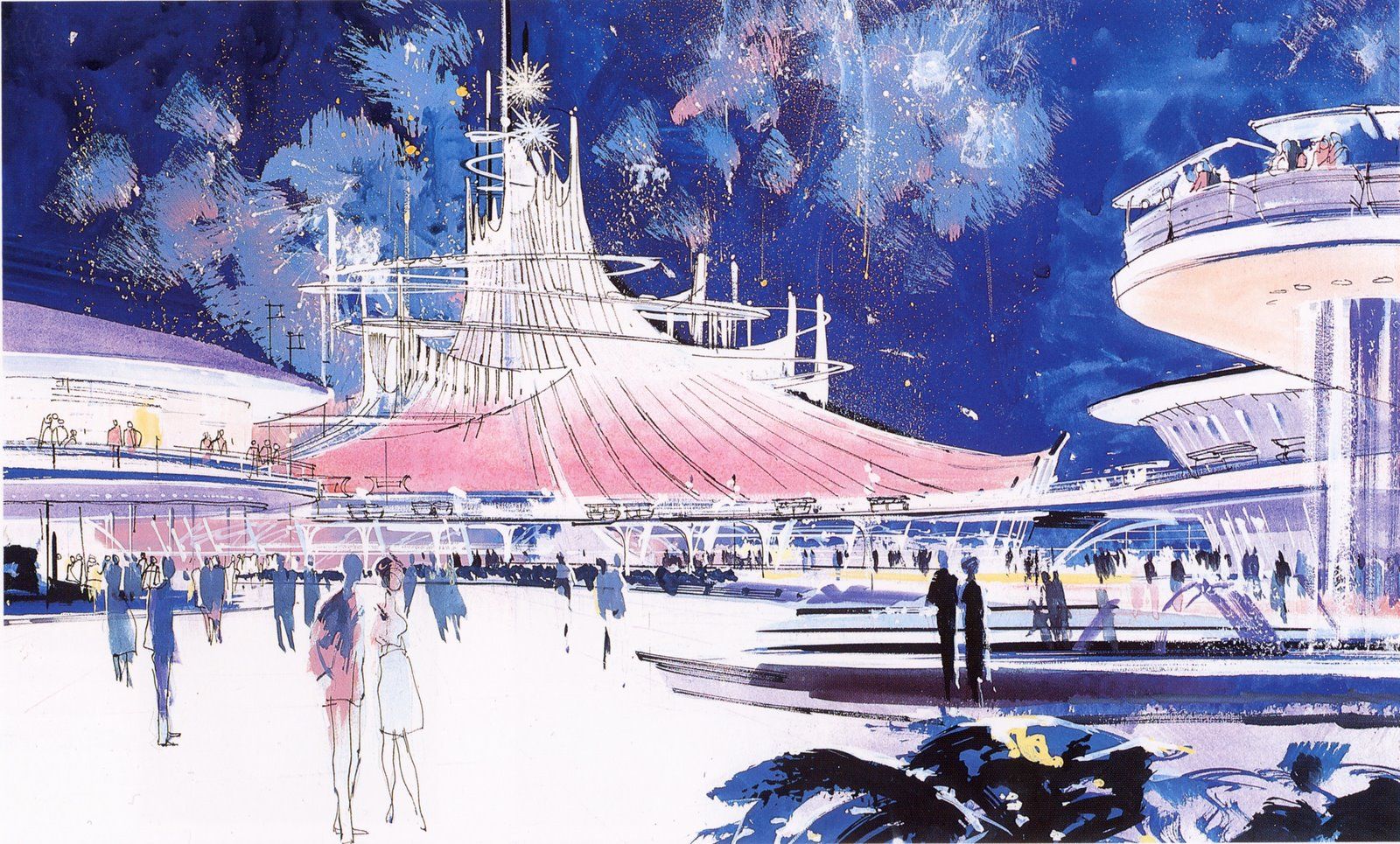
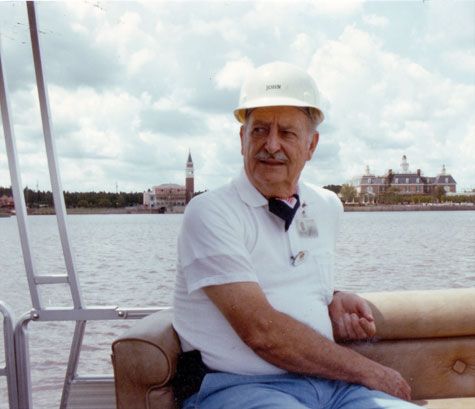
In June 1996, I had the pleasure of interviewing him in his office at Walt Disney Imagineering. At the time of the interview, John was choosing the colors to be used for the Magic Kingdom castle during the Walt Disney World resort's 25th anniversary celebration.
And now, here is the 1996 interview.
ALAIN LITTAYE: How did you enter the Walt Disney Company?
JOHN HENCH: Well, it happened in 1939. I have wanted to be a fine artist painter, and I reached the point in art schools were I'd like to understand more about images and how images communicate information to people. And I was not getting very far in that from my professors.
So I thought that it would be easier to learn that (if) I worked in motion pictures. So I went to work with one motion picture producer who was developing a color system. This didn't do to me much good. All I did was pick (out) filters for the camera. The other thing I tried was working for special effects. Which was not what I was looking for.
So I finally came to Disney, who was hiring people for "Fantasia." I like classical music, so I thought "This is fine." And I found what I was after, because the studio had developed a great skill in producing images that have great meaning for people.
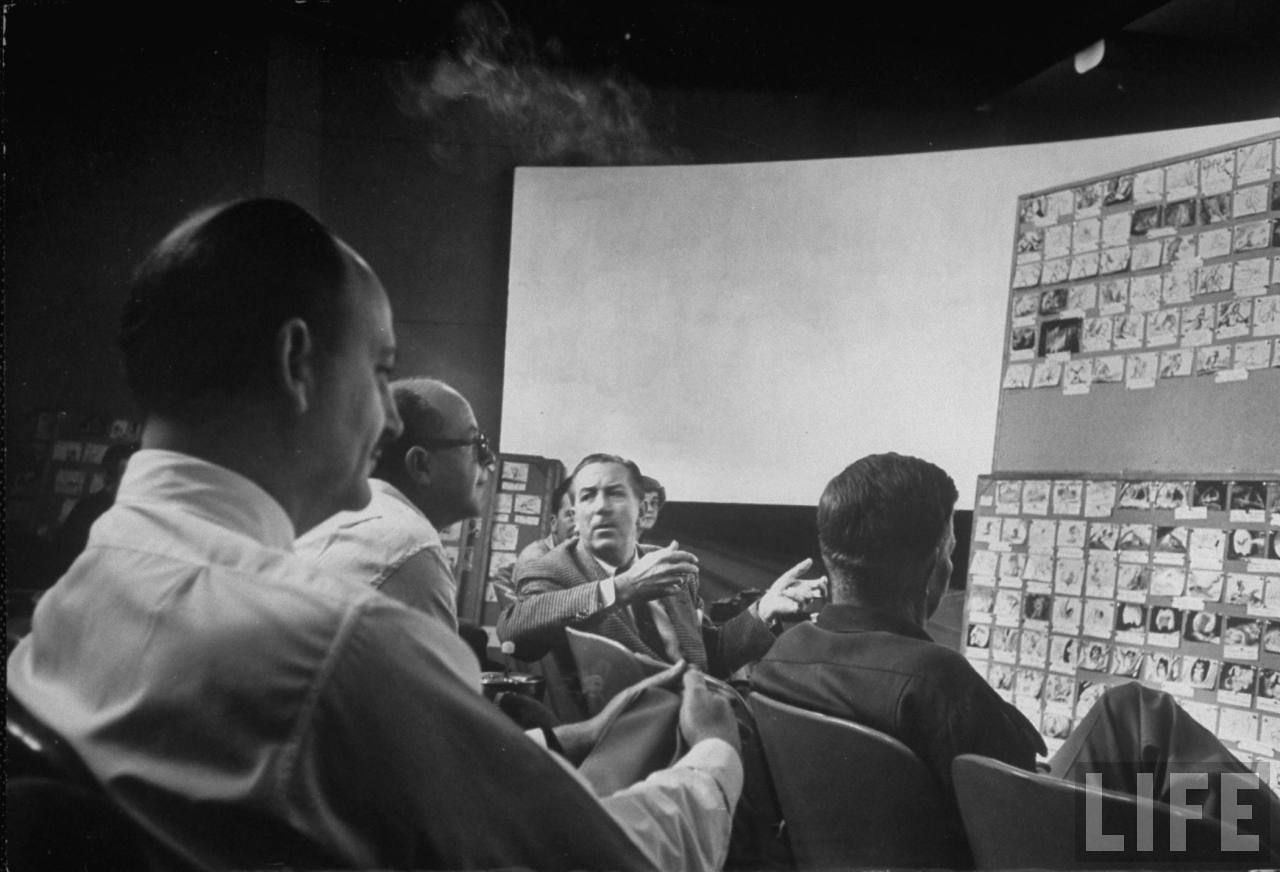
Mickey is one of the prime examples: Mickey has never been suspected of being an American export. It was déjà vu. They gave him a local name and he's been accepted everywhere he goes. Even in China. Children there, next to the Great Wall, who had never seen Mickey Mouse responded. So the studio did (have) that skill to communicate with images.
Of course, it gave the studio an enormous power, because I don't know any other place -- at that time -- who had that skill with images to communicate with. And the need of these kinds of images are even greater now than they ever were because we are losing our life symbols. We don't have too much ritual in our life anymore. And these life symbols which people rely on to keep their feeling of well being, that life is not too bad after all are required more and more....
AL: You went through a record number of different jobs while you worked at Disney. Which one did you enjoyed the most?
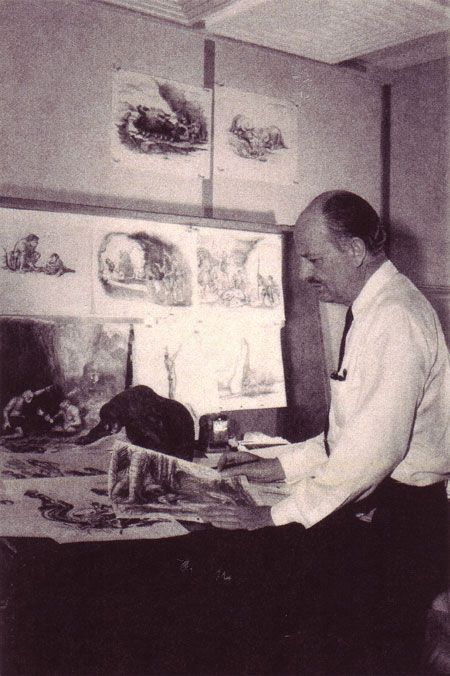
JH: I enjoyed all of them! I still enjoy all of them! But I was curious about how did it work, how did it function. And so I went from one job to another ...
Even the camera (department). One day, I told Walt: "I would like to work on camera for a while." He said "Well, really? What for?" And I explained to him that some of the scenes -- I was in background painting then -- didn't come out right. And I thought they had lit them wrong, particularly on the multiplane camera. So Walt said "Fine," and I stayed there for three years.
And I helped develop Disney's special effects department at that time, which helped very much when we worked on "20000 Leagues under the Sea."
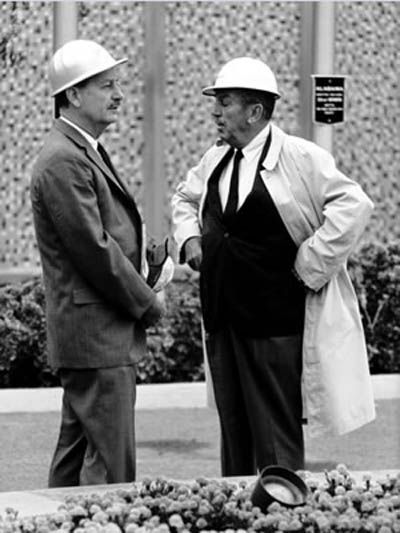
Then I started to work on Disneyland, on the idea of a theme park. Walt said one day when he walked by my desk "I want you to work on Disneyland ... And you are going to like it!" And he kept on going. I didn't have even a chance to answer!
But I did like it. Because it was much the same -- the same kind of things achieved in the movies but in another way -- three dimensional. We have the long-shot when you're coming in, then people come to the close-ups. When you're going from Main Street to Adventureland, there is a threshold. The painting is different, you get information from your feet that you are crossing something, and the music is different, etc. Walt put everything he knew about communication with images into the park, so it was very familiar.
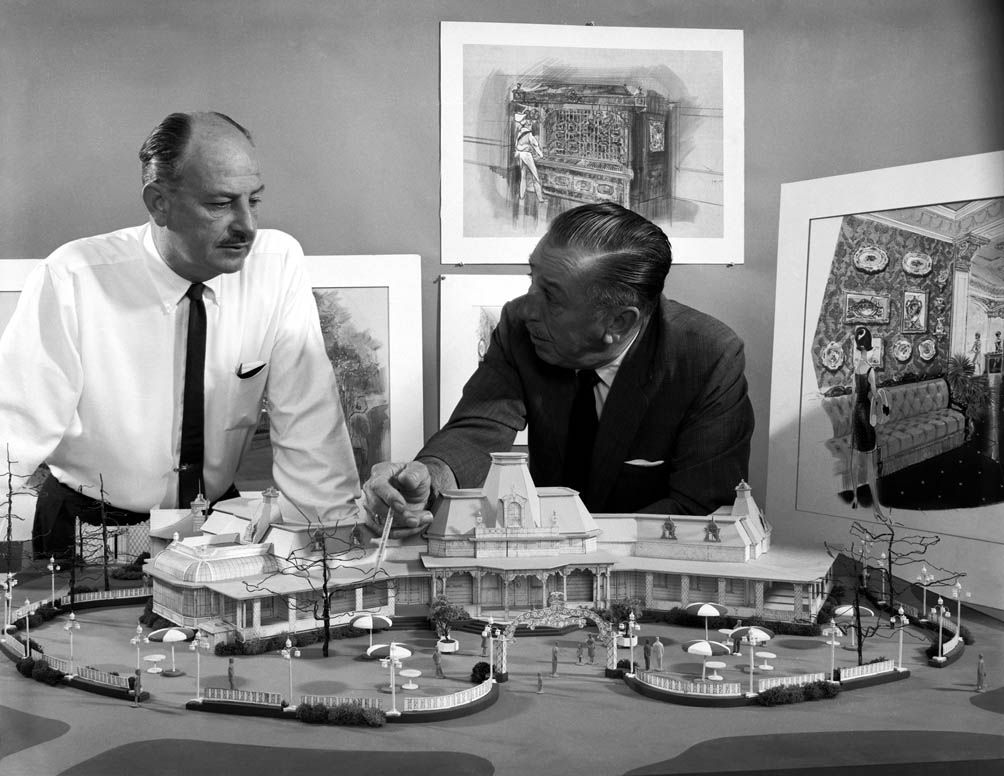
AL: When I am trying to explain to people in France who have never been in the park, I always tell them that Disneyland is a kind of accomplishment of the love of men for illusion. After the magicians in the ancient times, the modern magic from Robert Houdin, then came the cinema, and finally the theme park concept. Which is a kind of three dimensional illusion...
JH: That's right. And it achieved a kind of reality. Like these virtual reality games the children are playing with. I told them we were doing this 40 years ago! Disneyland is virtual reality...
Walt had a marvelous intuition. And because he understood people very well, liked them and had great respect for people, there was nothing cynical about Walt. In other studios I worked for, they were all cynical! When they did bad pictures, they were saying: "They won't know the differences!" But it©ˆs wrong, people do see the difference, and it's because they have feelings. They don't see it from the intellect, but from feelings.
And Walt understood all of those things, and even common things about people. For instance: Usually you get your idea of what kind of day it is by looking at the horizon, because the horizon is your eye level. So what Walt did is to eliminate the horizon. When you go to the park, there is no horizon -- just Disneyland.
And so the environment is very special, because nothing leaks in from outside. Even the sun is brighter! You have an impression of better weather inside the park than you do outside.
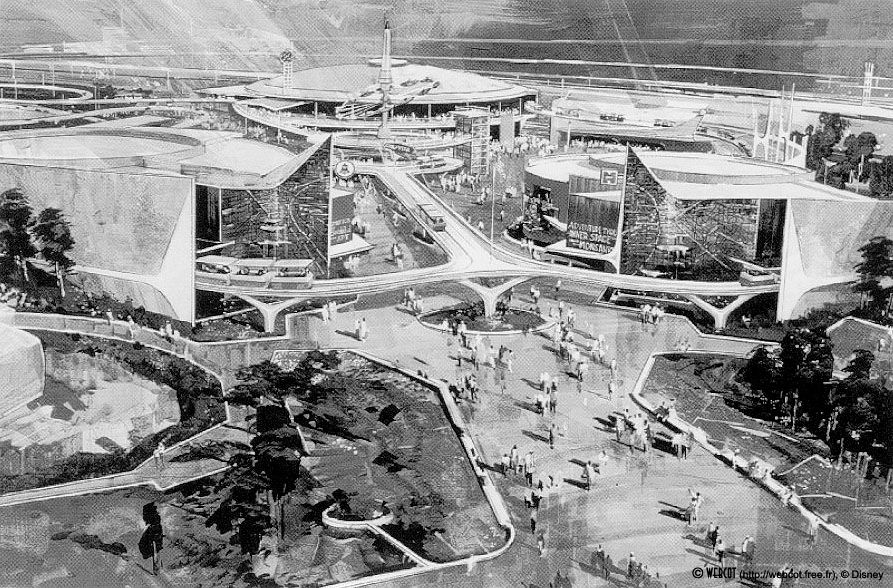
You know, since we're born, the first thing we fight for in life is that feeling of being alive -- and it's the last thing, too. We never want to give up that experience of being alive. And this is the secret of Disneyland: Everywhere in the park, it's like a pat in the back telling you: "You're okay. Life is good."
We've achieved this feeling, for instance, with the colors. The colors in the park are harmonious with each other, not like in big cities where they don't. Big cities are chaotic. And chaos for humans -- who have experience from their ancestors -- is the last step before conflict. So, in the park, every kind of visual contradiction has been eliminated.
We were trained from our work with cartoons. Everything who was on the screen was chosen. Anything who was not there was deliberately not there. In live action movies, you just hope that everything works. Because the actor may had a bad morning and doesn't play good, or accidents happen continuously. Many things contradict what you are trying to say. But in cartoons, nothing contradict what you want to say. And I think that's why Walt got into cartoons, because he knew he would have control. A director doesn't have much control, really. Only a little. Except maybe some great directors like Stanley Kubrick or David Lean. Because they're fighting for ...
AL: Talking about movies: You told me before that you worked on "20000 Leagues under the Sea." What kind of special effects were you involved?
JH: Well, there were a lot of special effects as you know. I did what we call dry for wet effects, some of the miniatures work and two animation sequences.
I even took the place of the actor who played Professor Arronax. It's the scene where Professor Arronax is sitting in his cabin, making an entry in his diary about a storm overhead on the surface, but quiet and calm where they were underneath the water. We could not find Paul Lukas that day. So I put on a coat and played his role. Actually, it's my hand that you see writing on the diary. Not in spencerian script, because I didnˆt had time to practice. You'll see it in the movie.
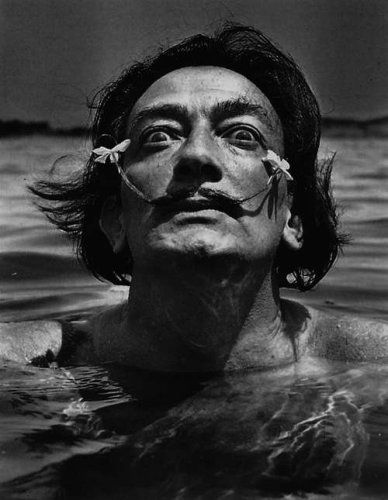
AL: There was this famous animated project called "Destino" on which you worked with Salvador Dali...
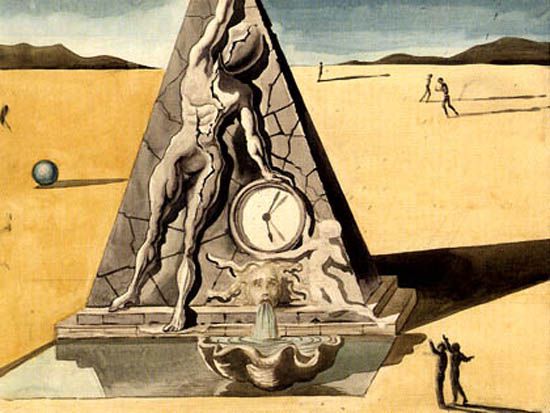
JH: Oh, "Destino"! Yes, it was with Salvador Dali. The theme of "Destino" was about space, time and love. It was supposed to be 10-12 minutes long, and included in what they called at that time a package picture, with a number of short subjects that make all together a long feature. It was supposed to be with "Three Caballeros," "Make Mine Music," etc. But at that time, suddenly our distributor -- RKO -- didn't want any more of these package pictures. So Walt reluctantly suspended on the film.
So there is only the story plus a 30 second test that I did. Because I thought that -- when Walt had seen these images on the screen -- he might want to go ahead with production of the picture. I shot a test with Dali. It was supposed to be animated, but I didn't had any animator! So we did something which was more animation effects than real animation.
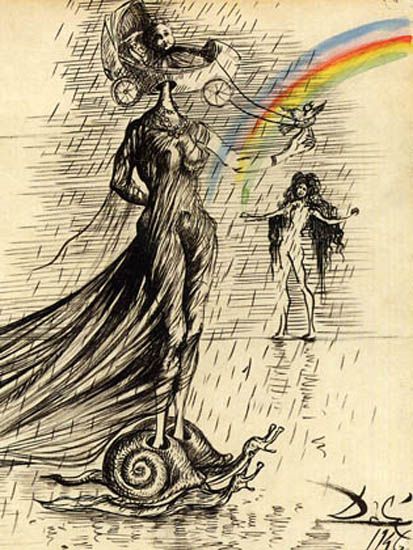
But the story was complete as were the storyboard too. And even the plans for production. Walt was sorry afterwards. He said we should have gone ahead and made it anyway. Because of the value of the document.
But working with Dali was wonderful. We shared the same sense of irrationality. He came every day at the studio for about a year. There were breaks in between of course, where he went back to his home in Spain. I went up there. We were good friends and we did many other things later. I helped him for the "Leda and the Swan" painting, for instance. He was not good at perspective of shadows. I helped him on several canvases...
AL: What was the origin of the project?
JH: Dali was working for Warner Brothers on the Hitchcock movie "Spellbound", and he stayed at Jack Warner's house in Beverly Hills. And Walt met him at dinner, because Jack Warner and Walt were friends. And Walt asked him if Salvador would like to come over and do something for us. Dali said "Yes." And so he came at the studio.
We had a piece of music, and Walt said "Why don't we make a short animated out of this?" And that's how it happened. The music was very banal, but Dali didn't mind, because he knew he could get a handle on anything. He could take the banality out of anything!
The fact is that Salvador enjoyed banal things, really. He was crazy about the western pictures, the worst ones in the world. And he reinvented the whole story. From the stampede and the long horn cattle, he will tell you that -- in fact -- it was all about the libido of one of the actors!
So he was never bored by anything, because he re-interpreted. One of the things he was doing was taking the dictionary and making a Dali equivalent for every word. He reinterpreted each word in a "Dalinian" manner and gave it a new meaning! This is a tremendous work!
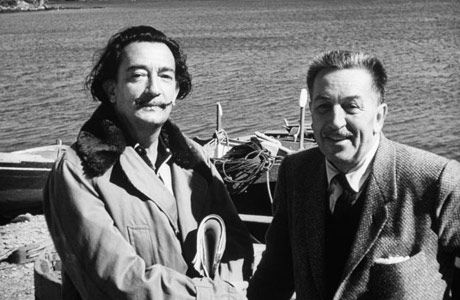
But Walt and him shared the same kind of optimism. Walt believed in himself, and he was optimistic about what he wanted to do. He just knew it will be okay, and Dali was the same way. They had a great deal in common that way.
AL: Can you tell us about the Disneyland attractions projects you work on and that were never built?
JH: Well, nothing really important. Nearly everything was built. One was ten years later and ... Of course, there is this Chinese restaurant project with a golden dragon and Confucius to entertain guests. Both of them were Audio-Animatronics, and Confucius was there to answer wisely to questions. It was supposed to be in the second street project for Main Street. But who knows? Maybe it will be built one of these days. We never throw away any idea...
For instance, some early ideas for Florida were done only recently. The idea of a little village was there from the beginning and now we have this "Celebration" village. Same thing for the Disney Institute. Walt talked about this idea in the very first.
Some other ideas had changed from their initial concept. The "Tiki room," for instance, was supposed to be a Polynesian restaurant. I had ordered tables, I had bought all the furniture. And Walt was listening one morning to a rehearsal of the show, and he said: "If we get rid of the tables, how many more people can we get in here?" So I took the tables out, arranged the chairs in a certain way, etc. ... And he said: "That's what we gonna do. I'll handle the man who was to operate the restaurant. So we can make a show out of it."
But the "Enchanted Tiki Room" show was all done, and it was a show who didn't had a curtain riser. It didn't had a start. It was supposed to start up very gradually. Walt's idea was that -- as soon as the people who were dining got through their main course (They were supposed to all be seated, served at the same time), when they got into the dessert ... This music that was supposed to only come from tapes like in any restaurant ... Something would happened. One bird will start to do a little jazz thing, and another bird will start to answer. And people would have say: "Something is going on here! What is this?" and the show would have come very gradually...
But, with no restaurant, you can't make a show like that. It must have an overture. And we tried to do something about that right up until the last minute before the "Tiki Room" 's official opening.
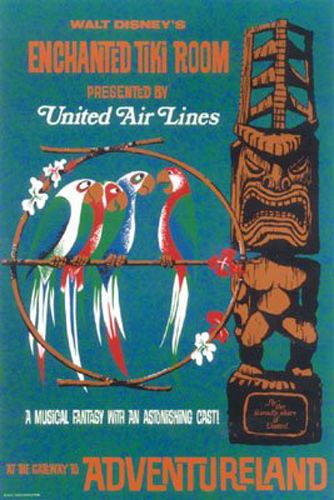
The show is being changed right now, by the way. Jeff Burke is doing it for the Magic Kingdom. And I think it will be better, with new birds, master of ceremonies, etc. ...
In the first version, we had to pretend that he birds were asleep. Somebody came in saying "Hey, wake up, wake up!" And we started the show that way which was very bad. I was always embarrassed about this. Because you can't design a show for one operation and then make a change so radically.
And not to mention this Offenbach music in the middle. Which is incredibly boring! I remember that I protested. I'm not a musician myself. But we had a big fight, the composer who did the music and me. His name was Buddy Baker. I'll never forget him!
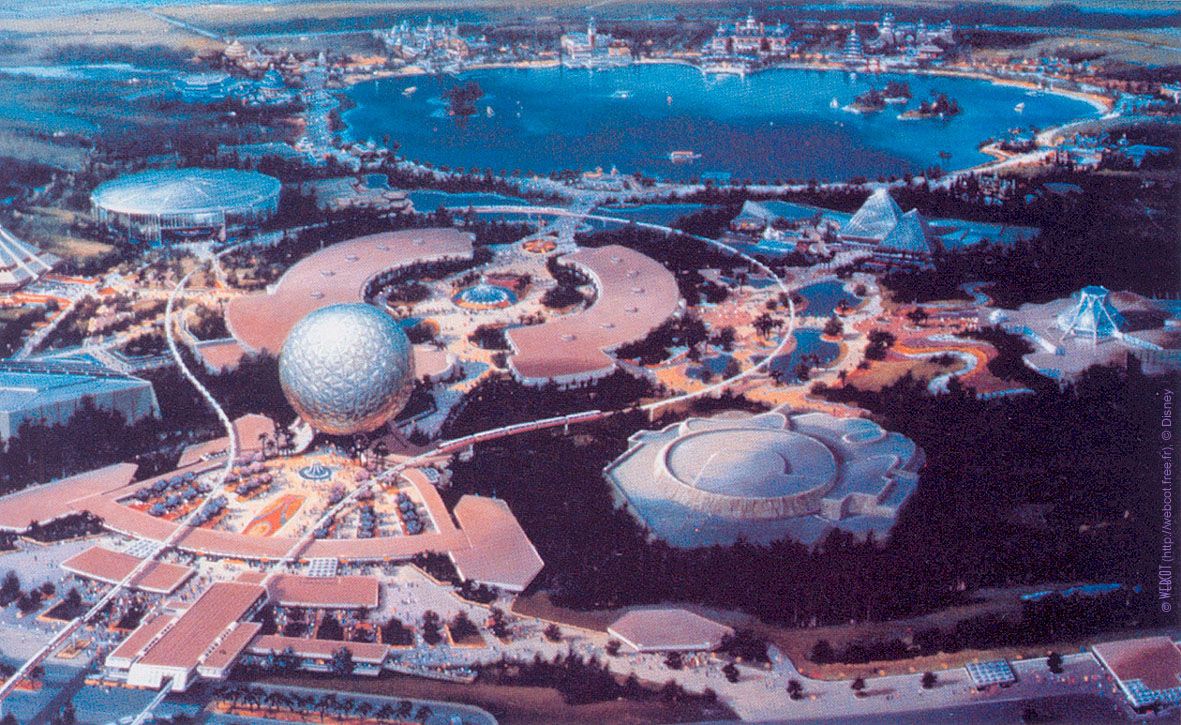
AL: Do you have memories about the original Epcot project?
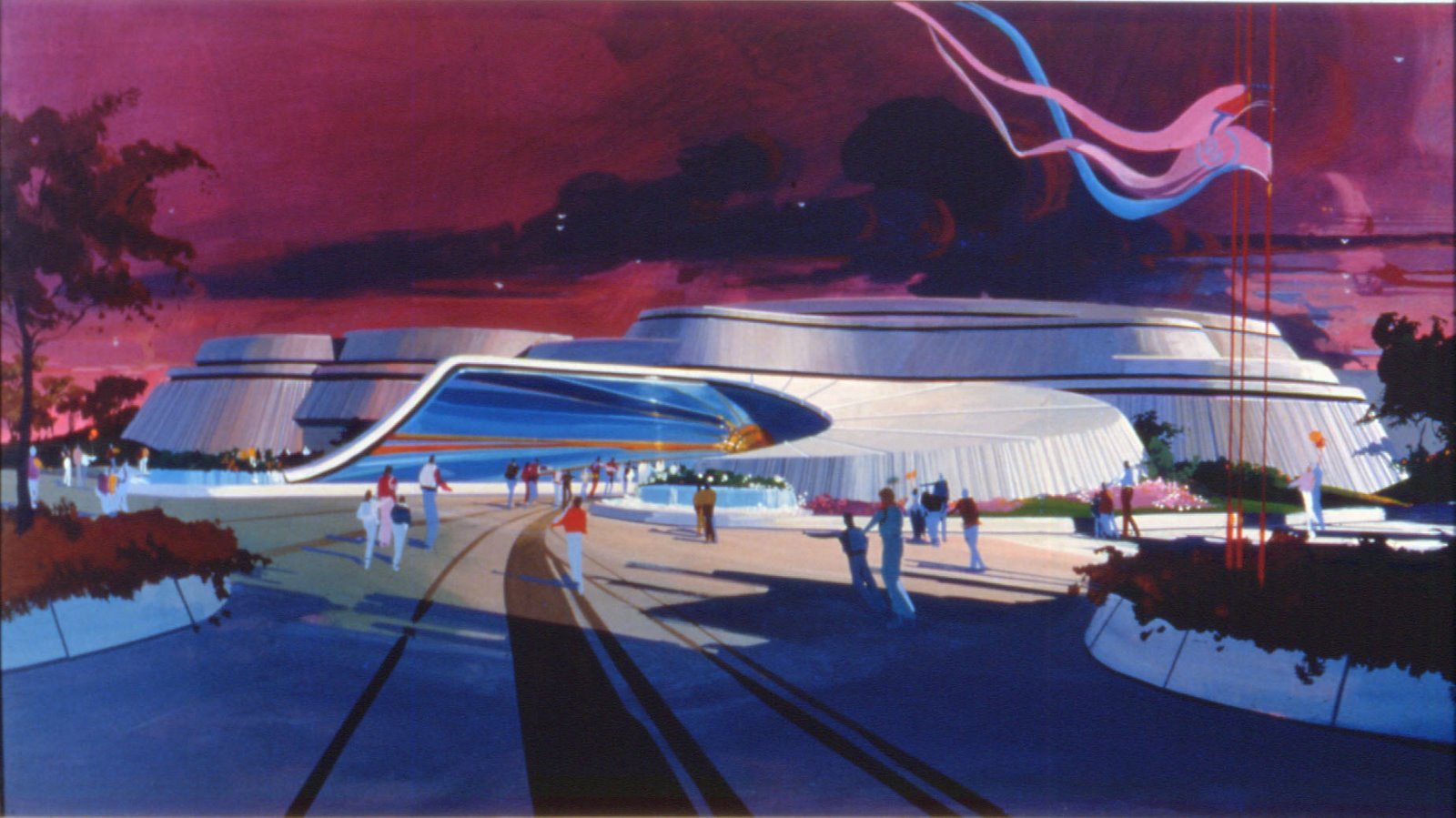
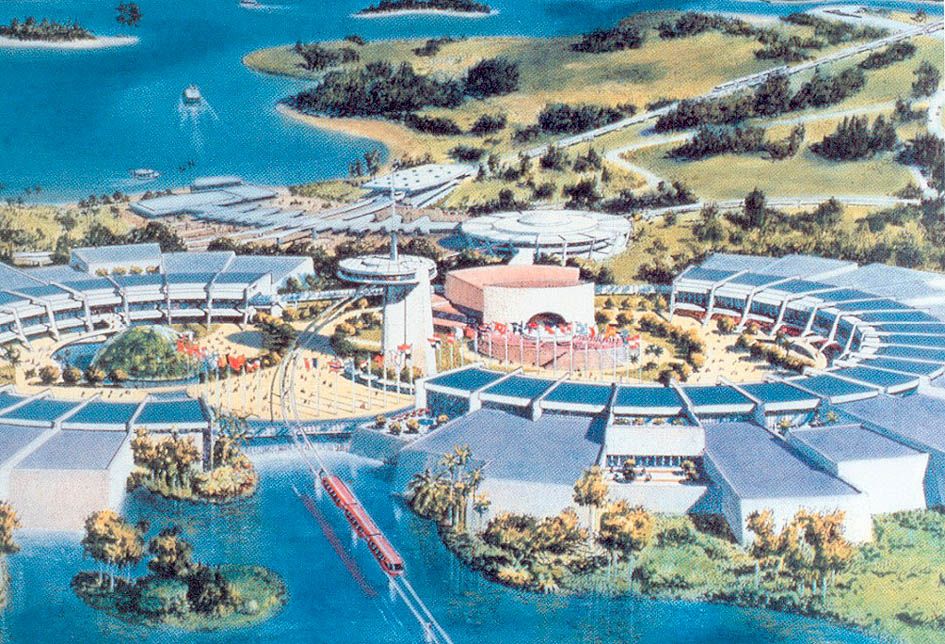
JH: I worked on the concept, the first layouts and designs for the property. I worked on all the attractions concept. I remember that -- at the beginning -- we had two separate models for Future world and world showcase. And Marty Sklar pushed them together, and we combined them.
I don't think that was too successful. Because I always thought that the two of them should have been more separate. Also I had planned the monorail station to be in the center. So that one day you would have (had to) go to World Showcase and then the other day to Future World. And I still think that would have been better.
AL: What was your worst challenges on your works for Walt Disney world?
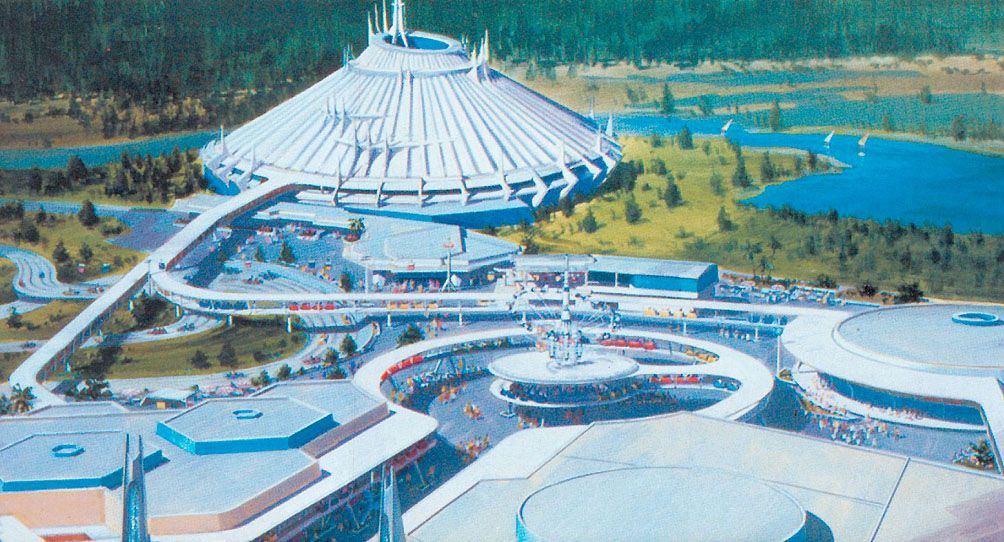
JH: Well, I suppose that every time there is difficulty. I remember about Space Mountain: It took us ten years before we found the technology that would allow such a ride. And during these ten years, I had a model that I kept, waiting for the technology we needed.
And one day, we finally found out the technique of separating and getting information about where every train would be at any moment. Of course, I went over budget many times, because -- as you go along -- some things improved, and you get better ideas. And you get advantage of what is there and all that cost money.
When we started a project, all my focus was on it, night and day. You never forget it until itˆs done. I suppose I always had a passionate relation with the projects. Because, you know, it's never a hard work when you enjoy yourself. Look, I've been here since 57 years, and I don't have to explain why I've stayed so long. I always enjoyed it.
AL: I can understand that. Where else somebody can give you 100 millions dollars to build some big toys?
JH: Nowhere, that's right. And no place where they believe in big toys.
AL: What is your favorite achievement on Walt Disney World?
JH: Usually, it's the last thing I've worked on. Now, I worked on colors. Color is a very critical thing. I've found that architects don't like colors. Engineers too. And so somebody has to stand in. Because this is the finish of it. It is the emotional part of a structure. I had great satisfaction in doing that.
AL: Sam Mc Kim was a specialist of western theming, Marc Davis was famous for the humor he introduce in the attraction. What was your specialty?
JH: Well, I suppose that I was a kind of consultant for taste. Is it good taste? Or bad taste? I had an attention to detail, to what would tell best the story. Because many people get excited about the work and drift off from the story.
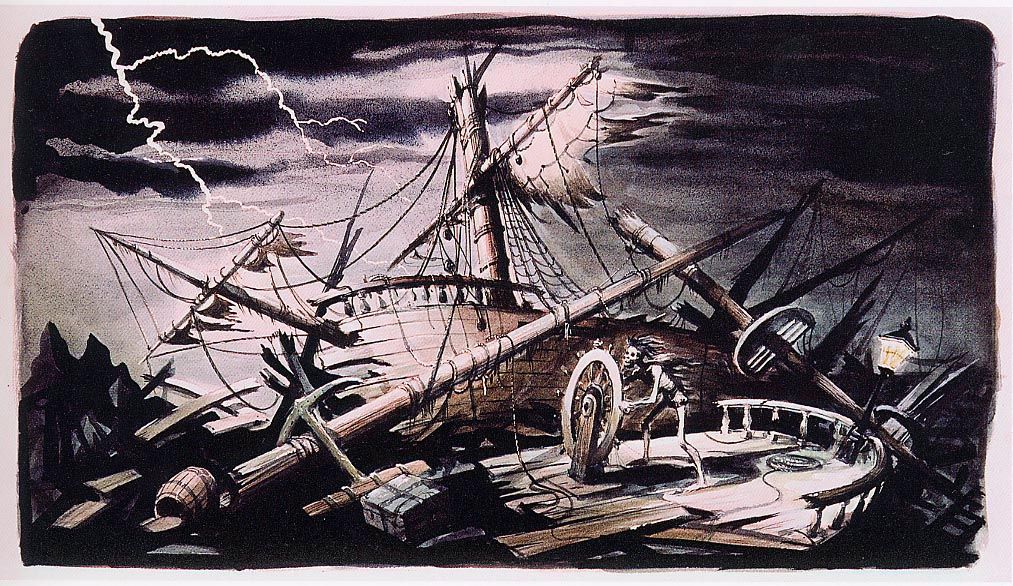
Like "Pirates of the Caribbean," for instance. When you get in, you see on the door: "Pirates of the Caribbean." So you expect to see pirates. Then you get on the boat, so you think: "This is okay. We're going to see pirates." The boat goes out and the first scene that you see is the restaurant. So people think: "Hey, these are not pirates. These are people having lunch. What happen to the pirates we are supposed to see?" Then we go down the chutes , and it's where the pirates were. But they're all gone. There is nothing but skeletons down here!
Well, it was never supposed to be like that. Walt died before we had finished. The original idea of Walt's was that you came down there, into the caves, and there were no pirates ... But they had been there just seconds before! There was a hot meal on the table, steaming. There were no jewelry hidden. Walt wanted this atmosphere: They were supposed to live here, they've been outside somewhere, but they could come back at any minute and catch us...
Then, you were supposed to discover the city, where they were. But because somebody like skeletons. And that they discovered that they were available at a cheap price, we used too many skeletons all over the place, and the public got the wrong message. Now people don't know what it was...
AL: In the Paris version, they put the skeleton at the end, not at the beginning.
JH: Well, at least they've learned something!
AL: Have you been to Disneyland Paris?
JH: Yes, I like it. The colors I choose there was to paint the first hotel, the Disneyland Hotel. Because of the cloudy sky we had in Paris, it had to be a particular kind of color who will fight those grey days. And also something you can see when you're driving up ... "There it is! We're arriving! " And I think it works well. Better than the castle. Someday, we'll have to paint this castle all over again!
AL: You knew Ray Bradbury who helped the Imagineers on the Orbitron concept. What was your relation with him?
JH: Ray is a good friend. And he was a good friend of Walt, too. We worked on several things for the world's fair together, on some of the exhibitions for industrial companies, and we're still consulting him occasionally. In fact, I think the studios are working on a cartoon picture from one of his books. He has talked with Roy Disney about it. But I don't know at what point is the project.

AL: What are you currently doing at WDI?
JH: Well, I happen to be working on two hotels. One is being rehabbed, repainting.And the other one is a large one. 1900 rooms, themed on the Southwest of the United States. New Mexico, kind of. It's an enormous amount of work: there are 28 separate buildings, and I work on the choice of the colors for everything. Outside colors, balcony colors, etc.. And all of this has to work together, in harmony.
I work also on the WDW castle. We are going to make a big cake out of it for the 25th anniversary. It's a big work. The logistic of that is just enormous.
AL: What is your fondest memory of Walt?
JH: I always admired his optimism. He seemed to know the direction he was going to. When I was at the studio, I remember he kept driving all of us back down to a more fundamental level all the time. When we tried to use -- let's say -- an event that was current, he said: "No, don't use that! It's all right for now. But I want these pictures to come back for years and I want them to have a meaning. If you use that now, it will be okay for today. But four or ten years from now, what will it mean?" And he was right: We still can release a 40 years old picture, and it's still good because it still has meaning.
Another memory I have is when I was working on a Stravinsky animation adaptation. It was supposed to be a ballet, and I didn't like it. Walt said "Why?" And I told him that I didn't know anything about ballet. And he said "Oh....Well, here is what I want you to do."
And Walt called the impresario of the Ballet Russes of Monte Carlo. And he arranged for me to go sit back stage for the whole season! For all the performances! And I made a thousand drawings, went back, and did my job without any complain.
Walt often did these kinds of things. Like letting me go to work down in the camera department. Who does this now? Nobody! You have a job, and you stay on it all your life now. Nobody now is going from department to another department. Only Walt did that.
I was very fond of him, really...
AND NOW , here is a youtube video where you will see John Hench with Walt , during the Disneyland 10th anniversary TV special.
Thanks to leave a comment or discuss this article on D&M english forum on Mice Chat
Interview recorded June, 24, 1996 by Alain Littaye, with the friendly help of Didier Ghez for the questions, and previously released on the JimHillmedia web site.
Photos, artwork and videos: copyright Disney
Thanks to freedogshampoo for the youtube link