Showing posts with label hani el masri. Show all posts

Thursday, January 25, 2018

Disneyland Toon Town Celebrates its 25th Anniversary, Discover Mickey Ville, the Toon Town Concept That Never Was !


Disneyland Toon Town celebrate its 25th anniversary today and i thought that it was the perfect time to repost a great D&M article about the first concept for Toon town which at that time was called Mickey Ville. You'll see wonderful artworks from Imagineer Hani El Masri who designed this version and who passed away two years ago, very unfortunately. Please click on each artwork to see them in big size.

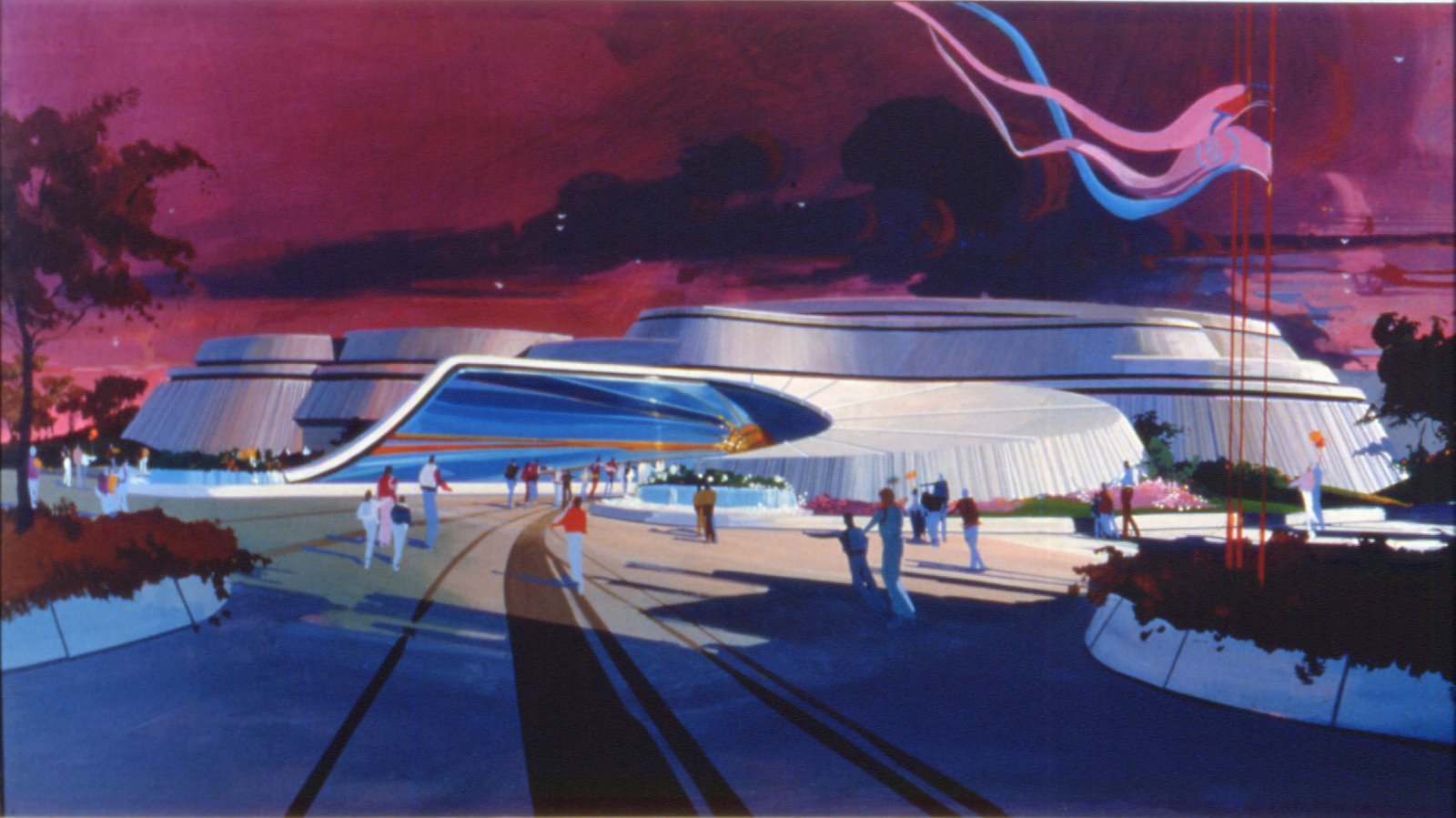
At the end of 1990, Hani was asked by Walt Disney Imagineering to work on the creative development of a new project "Mickey Ville" which was supposed to be a new land for Tokyo Disneyland.

It was the first study for a "Toon Town", but much different than the one we know, as the architectural style was more "medieval". For a very good reason: this Mickey's Ville was supposed to be a tribute to Mickey's "medieval" cartoons, like "The Brave little tailor" or "Mickey and the Beanstalk".

Hani's team was under the direction of imagineers Yoshi Akiyama and Bob Weis - yes, the same Bob Weis who designed the Disney-MGM Studios and Disney's America and who is now in charge of the huge placemaking of Disney's California Adventure.

Here is a first rendering of the Mickey Ville project. For the design of this artwork, Hani was also slightly inspired by the architecture of Pinnochio’s Village.


At the entrance, guests would have find at the left of the porch a nice fountain with Daisy...


But Mickey Ville also would have include a "Mickey's Music Store" with chimneys who looks like pipe organ. Inside the music store, CD’s, sheet of music, and all kind of merchandise items related to music would have been on sale.


Also envisioned, a "Minnie's Candy" house, which looks like a real candy house, and was supposed to be.....that’s right: a candy store.


Another interesting concept was this "Donald's Dock" where Donald's house and boat were mixed all in one.


In fact , Donald’s dock would have been the departure point where guests would have embark in small boats for a little cruise on a small river all around the village.


But the project also include this beautiful Mickey's Theatre - artwork above, on the top. Because the Oriental Land executives knew how popular Tokyo Disneyland is, they wanted a big theatre,. So, instead to design one big facade, Hani and the imagineers thought it would have been more interesting if all the facade was designed like a little village. With on the right side the house of Mickey and Minnie - not to forget Pluto’s doghouse.


And in the front, another cute fountain, with Minnie on the top.


The entrance of the Mickey’s Theatre was on the middle of this little village facade...


And inside the theatre, guests could have watch old Mickey’s cartoons - like “Plane Crazy”, Steamboat Willie”, etc..but also others animated shorts with Pluto, Donald, etc...

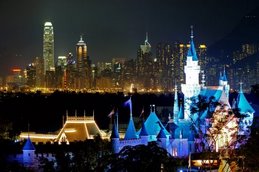
By the way, when i saw this Mickey's Theatre artwork, it reminds me the facade of Mickey's Philarmagic theatre at Hong Kong Disneyland. I remember when i was at HKD being surprised by the architecture, but may be HKD imagineers took their inspiration from this concept - who knows?

To come back to the Mickey Ville story, and always back in 1990, another team lead by Tony Baxter and imagineer Joe Lanzisero was working on another Toon Town concept, this time for Disneyland, Anaheim. And it seems that when the executives of Oriental Land Company heard about it, they decided to wait and see how this "other" Toon Town will look once it'll be built at Disneyland.

We know the end of the story: Toon Town opened at Anaheim, everybody loved its great "cartoon" style, and so did the Oriental Land executives who decided to build it at TDL.

This marked the end of the Mickey Ville project, and Hani moved from one team to another to work with Joe Lanzisero's team where he created the Toon Town concept-arts you saw yesterday.

All Artwork by Hani El Masri and copyright Disney and Walt Disney Enterprises Inc.

Many thanks to Hani El Masri for his great help in the making of this article.

Friday, April 28, 2017

Rare 1992 WDEye Issue Included DLP Imagineers Stories About DLP Making and Great Artwork Cover by Hani El Masri Showing Disneyland Paris Show-Producers Crossing the Atlantic !


You may not know it but from 1989 to 1999 a WDI in-house magazine was released for WDI Imagineers only. Jeff Kurtti was the first editor of WDEye and sent in 2008 to my co-author Didier Ghez for Didier's Disney History blog the following information about it.

"The magazine was created in the Communications department at WDI, since the Imagineer population had increased so much (a lot of "newbies"), and had spread all over the world. The idea was to create a communication that educated, updated, and helped bind the culture together.

The art, writing, and photography were pretty much all in-house and volunteer, and we had meetings to solicit ideas, contributions, and content.

Betsy Richman was in charge of the thing, I was the editor of issues One through Eight (I moved over to a new job at the Studio after that). I also wrote a large chunk of the content.

And of course, as always, Marty Sklar pored over every word with his relentless red pen! ;-) Gino De Young in the WDI Graphics Department designed and produced the first five issues, it then got to be too much for him to keep sacrificing every evening and weekend for free to do it, so an outside firm began to do the design.

It went away for a while, cam back with a whole new creative team, mission, and form, then went away again."

Above: WDEye 1998 Issue about Disney's Animal Kingdom

Here is the list of WDEye issues as listed by Didier Ghez in 2008:

November 1989 - Issue 1 - Wonders of Life
December 1989 - Issue 2 - MGM Studios
January 1990 - Issue 3 - 3 Men and a Business Plan
February 1990 - Issue 4 - Love Imagineering Style
April 1990 - Issue 5 - Jungle Fever
Summer 1990 - Issue 6 - Old Kids on the Block
Winter 1990 - Issue 7 - Fantasia is 50
Spring 1991 - Issue 8 - Lifestyles of the Budget
1991 - Issue 9 - Cartoon Sketching Map of WDI 1991
Spring 1992 - Issue 10 - Crossing the Atlantic
Fall 1992 - Issue 11 - Molding the Magic
Winter 1992 - Issue 12 - WDI 40th Anniversary
Spring 1993 - Issue 13 - TDL 10 Years Old
Summer 1993 - Issue 14 - Unsung Heroes of WDI
Winter 1993 - Issue 15 - Disney America
Spring 1994 - Issue 16 - WDW Tower of Terror

July 1996 - Fantasia Gardens - Premiere Issue
August 1996 - The Disneyland Resort
September 1996 - First E Ticket at EPCOT
September 1996 - Marty Sklar's 40 Years with Disney
Oct / Nov 1996 - WDW 25th Anniversary
January 1997 - Happy New Year
April / May 1997 - Club Disney
Summer 1997 - The New Amsterdam Theater
Winter 1998 - 1997 Year in Review
Summer 1998 - Disney's Animal Kingdom
Fall 1998 - Disney Cruise Line
Winter 1999 - Test Track

Now, for the Spring 1992 issue, the cover artwork was created by the great Hani El Masri who, at that time, was a very new Imagineer at WDI. Hani was charged with doing caricature portraits of Disneyland Paris five show producers and Tony Baxter? But at that time Hani he didn't know them and he sure didn't know what they all looked like because they were all working in Paris and Hani was in Glendale! So, he had to get all sorts of reference photos from anyone and everyone who could help him with that. It was a real job for Hani and he was worried that their caricatures were accurate. Marty Sklar was the one who ultimately approved that cover below and those likenesses.

Hani's illustration of WDI’s creative leaders for EDL was inspired by the 1851 Emanuel Leutze painting, “Washington Crossing the Delaware,” and features (clockwise) senior vice president Tony Baxter and show producers Eddie Sotto (Main Street), Chris Tietz (Adventureland), Tom Morris (Fantasyland), Jeff Burke (Frontierland), Tinker Bell and Tim Delaney (Discoveryland). With the triumphant opening of EDL behind them, this hardy band of Imagineers returns to the U.S. — “Imagineering Crossing the Atlantic.”

This artwork is currently on display in a very private but gorgeous exhibit at Walt Disney Imagineering of original artwork done for the creation of DLP. The exhibit is celebrating the 25th anniversary of Disneyland Paris, and it's a wonderful tribute to the team of concept designers who contributed to the creation of DLP. There's work by a lot of former Imagineers: Tim Delaney, Nina Rae Vaughn, Julie Svendsen, Frank Armitage, Bryan Jowers, John Horny, Eddie Sotto, the great Dan Goozee and many others.


In the same 1992 issue, many DLP Imagineers were telling short stories about the making of DLP. The WDEye article continues:
"They are safely back home now like soldiers of old, back from the wars, their ranks tired but victorious and proud. For years these Imagineers had been in the trenches, had toiled in the mud, rain and snow. Days beyond counting. Weeks without end. Like an earlier generation these men and women had fought on French soil, but this time there was no Maginot line nor an enemy about to invade their kingdom. Their common foe was the clock and the budget and ultimately theirs was the uncommon victory of making EDL happen, on time, on budget. Theirs was a feat without precedent on the continent of Europe. So before the colors fade and the sound of fanfares die, let us hear some of the stories of those hearty souls just back from the front…

Stan Abrahams
Animation Development
 “The sword-fighting pirates was the most complex sequence we’ve ever tried to program. These two guys nearly destroyed each other as they were being programmed. They’d tangle up their swords, punch each other, even tear the hair off of each other. We replaced clevies (U-shaped hackles), strengthened the arms, changed the swords. Doug Griffith and Eric Swapp did an incredible programming job, but not without a battle — a literal battle!”

Mark Handon
Ride Development
“Last December, we had a day where we were testing the steam trains. We’d alerted everyone to the fact that we were going to take the trains out and away we go through the Pirates of the Caribbean tunnel to the Fantasyland Station. There we come to a grinding halt, because there’s a contractor pouring colored concrete, positioned over the train tracks. He’s just finishing up the train station platform. So we have a little conversation, and it’s decided that they’ll move their rig. Before they can do that, however, they have to clean out the concrete hose. To do this, you pump a foam ball through the hose, and it clears out the concrete. They’re in the process of doing this, and all of a sudden, there’s a huge explosion when the foam ball emerges. Six guys standing near the freshly poured platform topple backwards into it. The hose is whirling wildly overhead, like a sprinkler gone wacky, spraying the trains, the station, and all twenty or so people in the vicinity with fresh, wet, sticky colored concrete. You can’t wash concrete out of a beard or mustache — you have to cut it out.”

And more: “I was in the roundhouse with Bob Harper, our railroad guru from Walt Disney World. In walk Jim Cora and Dick Nunis. They talk with Bob about the corning October 12 press event, because they want to run the trains during the event. ‘Well, Bob, there’s no question about who’s going to drive the train,’ says Dick, but who’s going to be your fireman?’ At which point, I yell out, ‘I’ll do it.’ ‘Not with that beard,’ says Dick. ‘Not a problem, I’ll shave it off,’ I say. Dick says, ‘You’re on. Just send me the before and after photos.’ The evening of October 11, I shave. The next morning, my wife rolls over in bed, opens her eyes, and screams-she didn’t know who was in bed with her. I patch that up, get into full costume and go drive the trains with Bob. I have to tell you, it was the happiest day of my life. My beard is now part of my marital contract. And Dick’s still waiting for those photos.”

Aric Adolph
Production Management
“In support of the effort to ‘light up’ Euro Disneyland, about 5,008 light fixtures had to be designed, procured and shipped to France. By January ‘92, the team had successfully completed and shipped 4,989 fixtures-or so we thought. In late January, we received the painful breaking news that 510 lighting poles we had sent to France were cracking and if we couldn’t send replacements within 30 days, we risked delaying the Park opening. The then disbanding themed lighting team regrouped to expedite a ‘crash pole recovery program’ and, within 28 business days, shipped all 510 replacement poles to France-on schedule!”

Beth Ann Brody
Show Set Design
“For the jewel scene in Pirates of the Caribbean, we used over 30,000 gold coins to dress the area. There I was, happily pasting coins down with silicone gel, when all of a sudden I leaned back and sat in a pool of the stuff all over a new pair of pants and a sweater. It doesn’t come out, let me tell you. The only way to get out of the scene was to jump off the boat to get to the other side, and many times we missed the boat and fell into the water. You think silicone gel is bad, try being wet when it’s 20 degrees outside! I was assisted in this noble endeavor by a great crew of French and British nineteen or twenty-year-olds, all extremely talented.”

Geoff Puckett
Special Effects
“The Fantasyland castle team was racing against time to get the castle finished for the October 12 press event. We’d had numerous meetings to discuss installing the three ‘polage’ windows, the stained glass windows with special polarized images and colors. The tallest tower window, ‘T-1,’ was scheduled to be lifted into place two days before the big celebration. At installation, during the ten-minute lowering of the crane’s platform, Chalmer Day, the castle coordinator, asked me if I had a problem swapping the T-1 window with a regular stained glass window, so the polage would be positioned facing Fantasyland instead of Main Street. Chalmer said Tony Baxter thought it would make more sense. Tony was right it did but there went all those months of planning, the trip to the production vendor in Milan, Italy, and countless discussions with the project engineer, not to mention the steel modifications to allow access for equipment installation that would now be necessary. The French have a way, when they don’t want to do something, of saying ‘it’s imposseeble,’ and at this point I said ‘it’s impos-seeble.’ The next thing I knew, two guys were hacksawing the custom-built illuminator frame to make it fit into the newly designated window. An hour later the pieces were in the tower and two days later the reversed polage was impressing everyone from its highly visible position above Fantasyland. So much for meetings and paperwork!”

Katie Olson
Show Design
“In January, the paint would literally freeze on the brush before you could get it on the walls. We had to tent the buildings on Main Street and use salamander heaters (gas-burning cooking ovens) to get the temperature up to paint. Sometimes I had to tell the guys to stop painting because it was too cold, and there’d be a big cheer! The funniest sight was walking down Main Street at tea time and seeing everyone roasting weenies and heating food up on the salamander heaters because they had big flames.”

Keith Goodrich
Show Production
“I lived in Esbly just minutes from the site, and in the spring and summer, I rode my bicycle through the French countryside to the site and back. There is this beautiful town on the way called Coupvray with a scenic canal off the Marne River Riding through the site, the workers were unaccustomed to seeing someone arrive to work on a bike. I got the strangest looks! Of course, I rode with a helmet and a Walkman.”

Don Winton
Show Production Design
“The funniest moment I remember was when we almost had an international incident because one nationality was working on the floor above another nationality. It is customary in Europe for men to urinate in the open, and the men working on the lower floor walked off the job because they were getting wet. A major negotiation took place to get the men back to work. Similar bizarre peacemaking efforts went on all the time.”

Eddie Sotto
Concept Design
“There’s a recording of a barking dog on Market Street that plays all night long, even when the Park is closed. As we all know, EDL Security Hosts walk the Park with their security dogs late at night. One night, as one of the guards passed Market Street, he heard the howl of a dog emanating from the second story of one of the buildings. Thinking that one of the beloved security dogs was accidentally upstairs, the guard summoned help until there was a swarm of fellow officers combing the upstairs catwalks and rafters of the empty show building. The frantic guards searched in vain until they finally found the ‘dog’ peering out of an upstairs window-disguised as an audio cable and a loudspeaker!”

Mark Stutz
Show Production Design
“While most of the CIRCLE-VISION®360 set was built in the States, we had the new EDL Central Shops design a steel lean rail for us in Europe. Because the rail had to go all the way around the set, we specified that it be made in sections, but our instructions suffered in the translation and we ended up with a solid steel railing 30 to 40 feet across. Nobody knew how to move it. It took about 20 Irish workers just to pick the thing up and hoist it onto an enormous flatbed truck. And we blocked traffic for an hour it was an epic.”

Terry Villosenor
Show System Coordination
“A representative from the French Bureau Veritas came to the Park to witness a safety test on a prototype canoe. We piled 20 Operations kids into the canoe and had them paddle about, rock the boat and stand up. We even had them dump it over, then flip it right-side-up and sit inside, waist-deep in water. Convinced this thing was perfectly safe, the guy motioned the canoe back to the dock. Everyone was happy, shaking hands and as we ushered him out, one of the guys slipped and fell in what had just been determined a safe canoe.”

Ken Lennon
Show Lighting
“One Monday morning at 6 a.m., I noticed I was low on gas and pulled off the highway to find a gas station. I was still asleep, but it’s no excuse-I don’t speak French. I put what I thought was gas in the car from a dispenser marked GASOLE. The car died about 1000 yards out of the station. I hike back to the station, call EuropCar, and at that time in the morning, no one speaks English. Finally, a woman who speaks limited English tells me I’ve put diesel instead of regular gas in the car. There’s a smile in her voice — she’s amused. She tells me she’s sending a tow truck. It’s zero degrees outside. I wait. At 7:30, the tow truck pulls up, and I climb in. The driver speaks no English. We get to my car, and he tries to start it. He points to the gas level-he knows the car’s full. He’s confounded. I start the car, and snowy white smoke billows out of the tailpipe. There’s a big smile on the guy’s face. All he says is Euro Disney?’ I figure he’s seen this little problem several times in the past few years.”

Yvette Robledo
Show System Coordination
“ In Fantasyland , we wanted to do each attraction in its language of origin and decided to do Snow White in Dutch. When the finished main marquee arrived in Europe, Eric Van Dijk (who is Dutch) took a look at it, went bright red in the face and very carefully explained that the literal translation of this sign was a derogatory Dutch term for a part of the female anatomy and could not be used.”

Jenna Frere
Show Design
“A crane was once brought in to help on Adventure Isle, but it sank midwheel into the mud. A second crane tried to rescue the first, but it toppled over sideways and sank, too. Then a third crane tried to pull the first two out and it got stuck. It was — amazing three enormous crashed cranes, just trying to do one little thing on the island, stranded-for days-until someone was finally able to dig them out.”

Richard Brown
Show Production Design
“Last December, Dick Fleshman (Ride Systems) asked me if I would dive under the Rivers of the Far West with him to see why the riverboat was still attached to one of its four mooring pylons. Dick and I are both licensed divers, and you always dive in pairs, so we went out and bought dry suits, put them on over our clothes and waded into the river. The only problem was that it was around 20 degrees outside, with a water temperature of 34 degrees. Luckily, the water was only chest deep, but it was covered with an inch of ice, so every few feet we had stop, break the sheets with our elbows and keep going. At first we snorkeled, but there wasn’t any visibility, so we decided we’d better dive. We went into Phantom Manor to warm up, then put on our tanks to dive. We had to swim in from the stern down an 18-inch tunnel of swirling silt. Visibility was less than arm’s length with flashlights. It was cold, forbidding. My face became numb and the cold crept into my suit. I could see the beam of Dick’s light for awhile, then nothing. I lay under the boat listening to my bubbles, wondering what to do, and thinking how unfun this was. Finally, after what seemed forever, I felt a sharp pounding on my shoulder. Dick had gone out another way and came around for me. After surfacing, the first thing he said was, ‘I got it figured out, so let’s get out of the water.’ All that was needed was to raise the water level of the river another foot. I was glad it was over.”

Steve Blum
Ride Systems Engineering
“Project management relieved a lot of tension with practical jokes. I still don’t think Brad Borgman knows Val Usle was the one who rigged the battery-powered water pistol to empty itself on Brad when he sat down in his chair. The cruel thing about it is that not only did Val get Brad with the gun, he convinced him that Mike Strong was the guy who had done it and stayed up with Brad until the wee hours of the morning to help him play the joke on Mike.”

John Hogg
Show Set Design
“I was walking through Discoveryland early one morning. It was freezing and everyone was minding their own business. All of a sudden, my left foot sticks in something. I look down, and I’m up to my ankles in freshly poured concrete. No markers, no signs, no workers, no warning. I look up, and there’s the OPM (Tony Carton) scowling at me all the way across Discoveryland. To cover my embarrassment I began yelling ‘Where the hell are the barricades? ‘ Twenty minutes later, Mark Stutz does the same thing. Job security for the pavers?” (Tony Catton says, “@#$%^&**@, John and Mark!”)

Nancy Candy
Ride Systems
“The EDL Star Tours motion system test-and-adjust period was six weeks. It was a site regulation to wear steel-toed boots and I chose the smallest size boot available. I wore those things every day, backandforth across the muddy trail to Star Tours. After the first few days, my left foot really hurt. Four weeks later I went to the doctor, who diagnosed gout, and told me if my foot continued to hurt, to get an x-ray if I wasn’t better in a week. Finally, I got an x-ray (my husband insisted), and voila! my foot was broken. The cast took two days to dry! I had to finish up the last eight hours of test and adjust by phone with a stand-in witnessing the remaining tests.”

Francine Agapoff
Interiors
“I worked with Theme Lighting at EDLI, and part of my job included visits to vendors to monitor the production of lighting fixtures for the park. Clive Dinmore (also of Theme Lighting) and I made a trip to Marrakesh, Morocco in July of ‘91. It was 126 degrees (seriously), and Clive and I (unwisely) drank orange juice in the bazaar on our first day. We both became very ill the Moroccans called it Khadafl’s revenge. We were exhausted Imagine how we felt when we heard that the purchasing agent (with a contracting firm) who had accompanied us on this business trip had been at the hotel all day, shopping, suntanning, having a massage, you name it.”

Pictures: copyright Disney

 Text: copyright Didier Ghez, Spring 1992 WDEye Issue

Monday, August 24, 2015

Hani El-Masri, WDI Imagineer and Artist Extraordinaire Dies At 63


An extremely sad news happened this morning as Hani El Masri, former WDI Imagineer, highly talented designer and illustrator and very good friend of mine died in Los Angeles at 63 at 2.30 am, surrounded by his son Cherif and friends.

Hani had more than thirty-five years of an award-winning, creative career in illustration, graphic design, and advertising as well as children’s books and theater productions. And for Disney fans he was a WDI imagineer who did creative concept for many WDI projects. You may not know it but Toon Town, Tokyo Disney Sea Arabian Coast, Blizzard Beach and many more wouldn't have been the same without the help and creativity of Hani. Hani worked at WDI from 1990 to 1995 and here is the list of the projects - coming from Hani's resume - he worked on when he was Concept and Show Designer at Walt Disney Imagineering:

- Responsible for creating environments, facades and props on diverse projects ranging
from Toontown at Disneyland, California to special show of Egyptian collections at Walt Disney World in Florida.
Major projects included:
- Tokyo Disneyland’s Critter Country; Concept design of Grandma Sara’s Restaurant.
- Mickeyville, for TDL (was not built, but was the inspiration for Toontown, Disneyland).
- Toontown, Disneyland: Entirely responsible for all the designs and structure of Minnie’s House and Goofy’s Bounce House, from concept to props.
- WESTCOT: Lead designer for Africa and the Middle-East.
- Blizzard Beach, WDW, Florida: Architecture of village, props, fabric design for cast
members’ shirts.
- King Tut: Concept of special proposed exhibit for the famous collection at World Showcase, EPCOT.
- Tokyo Disney Sea: Concept image, props and taxi boats for preliminary presentation.
- Disney Stores: Special production designs of four bas-reliefs, Gallery Store, Santa Ana; six stained glass windows, Union Square Store, San Francisco.
- Disney Traveling Show: Design and model-painting of dining courts.
- Moroccan Pavilion, EPCOT: Concept of renovation.
- Arabian Coast, TDS (Tokyo Disney Seas) : Concept for general architectural look and design of buildings and area development as seen in the actual park.
- Sindbad Ride, TDS: Concept to design of characters, backgrounds, props, styling of architecture, etc.

We will now have a closer look at Hani's life and career at WDI. You can see even more of Hani's artworks on his website HERE and those of you who speak or understand Egyptian can see videos of Hani on Youtube HERE, or HERE or HERE during Hani's presentation at a TED Conference in Cairo in 2014.


Hani was Egyptian, but he was raised by French Jesuits in Cairo. Thanks to this, he spent most of his childhood reading european literature, and so, at the surprise of others WDI imagineers, he was familiar with the world of European tales, myths and architecture.

And, as an Egyptian, and after five years of academic studies at Cairo's school of Fine Arts - the oldest in the Middle East - he was of course also familiar with Oriental tales like the famous tale of "One thousand and one nights". So, it's naturally that in the mid 90's Walt Disney Imagineering asked for his help on the design of Tokyo Disney Sea's Arabian Coast.

He arrived to the United States in 1987 and freelanced until being hired by Walt Disney Imagineering in March of 1990. We will have a look to his work for Walt Disney Imagineering, but while he was in California, Hani did some beautiful watercolor paintings like this one of Los Angeles Chinatown - picture below - who look also like a decor study for a Disney theme park...

Or this one of the San Juan Capistrano mission. By the way, this reminds me that San Juan Capistrano was part of the inspiration for some of the Zorro series decors...


At walt Disney Imagineering, Hani, as i've said, worked on many different projects, whether it was the Blizzard Beach concept - here two concept study for the Summit Plummet chalet and the Merchandise shop.


Or these boat concepts for Tokyo Disney Sea....


Not to mention this beautiful Nautilus artifact who was supposed to be placed outside on TDS Mysterious Island. The imagineers idea was that, when a guest will use the telescope to look at other places of the park, a green laser ray coming out of the telescope would have point the place the guest was looking at. Great idea, unfortunately never realized.


For Tokyo Disneyland, Hani - and it was one of his first work for WDI - did the concept-art for the Grandma Sarah Restaurant located in Critter Country.
He did also amazing concepts of "Critter Cars" that Tokyo disneyland wanted to use as photo-ops in the land. The first rendering below was inspired by the shape of an old Rolls Royce - totally transformed in a vehicle you will only see in a Disney theme park!


Hani also worked on the Disneyland Toon Town project and ended up designing Minnie's House and Goofy's Bounce House, and here is the concept for his Goofy's house...


And pictures of the model that was done inspired by Hani's concept art


This color rendering was Hani's concept for Minnie's house...


Here are the preliminary black and white study for Minnie's house


And, too, pictures of the model inspired by the concept arts


But there is much more to say about Hani's work for Toon Town as all began in fact when at the end of 1990, Hani was asked by Walt Disney Imagineering to work on the creative development of a new project "Mickey Ville" which was supposed to be a new land for Tokyo Disneyland.


It was the first study for a "Toon Town", but much different than the one we know, as the architectural style was more "medieval". For a very good reason: this Mickey's Ville was supposed to be a tribute to Mickey's "medieval" cartoons, like "The Brave little tailor" or "Mickey and the Beanstalk".

Hani's team was under the direction of imagineers Yoshi Akiyama and Bob Weis - yes, the same Bob Weis who designed the Disney-MGM Studios and Disney's America and who is now in charge of the huge placemaking of Disney's California Adventure.

Here is a first rendering of the Mickey Ville project. For the design of this artwork, Hani was also slightly inspired by the architecture of Pinnochio’s Village.


At the entrance, guests would have find at the left of the porch a nice fountain with Daisy...


But Mickey Ville also would have include a "Mickey's Music Store" with chimneys who looks like pipe organ. Inside the music store, CD’s, sheet of music, and all kind of merchandise items related to music would have been on sale.


Also envisioned, a "Minnie's Candy" house, which looks like a real candy house, and was supposed to be.....that’s right: a candy store.


Another interesting concept was this "Donald's Dock" where Donald's house and boat were mixed all in one.


In fact , Donald’s dock would have been the departure point where guests would have embark in small boats for a little cruise on a small river all around the village.


But the project also include this beautiful Mickey's Theatre - artwork above, on the top. Because the Oriental Land executives knew how popular Tokyo Disneyland is, they wanted a big theatre,. So, instead to design one big facade, Hani and the imagineers thought it would have been more interesting if all the facade was designed like a little village. With on the right side the house of Mickey and Minnie - not to forget Pluto’s doghouse.


And in the front, another cute fountain, with Minnie on the top.


The entrance of the Mickey’s Theatre was on the middle of this little village facade...


And inside the theatre, guests could have watch old Mickey’s cartoons - like “Plane Crazy”, Steamboat Willie”, etc..but also others animated shorts with Pluto, Donald, etc...

By the way, when i saw this Mickey's Theatre artwork, it reminded me the facade of Mickey's Philarmagic theatre at Hong Kong Disneyland. I remember when i was at HKD being surprised by the architecture, but may be HKD imagineers took their inspiration from this concept - who knows?

Let's come back to the Mickey Ville story and, always back in 1990, another team lead by Tony Baxter and imagineer Joe Lanzisero was working on another Toon Town concept, this time for Disneyland, Anaheim. And it seems that when the executives of Oriental Land Company heard about it, they decided to wait and see how this "other" Toon Town will look once it'll be built at Disneyland.

We know the end of the story: Toon Town opened at Anaheim, everybody loved its great "cartoon" style, and so did the Oriental Land executives who decided to build it at TDL.

This marked the end of the Mickey Ville project, and Hani moved from one team to another to work with Joe Lanzisero's team where he created the Toon Town concept-arts you saw above.


In 1995 Hani was hired as a visual development artist by Dreamworks SKG - Steven Spielberg's studio - to work on the animated "Prince of Egypt" which i personally still consider as the best animated movie done by Dreamworks.


Hani stayed at Dreamworks for another two animation movies "El Dorado" and "Spirit". Above and below, some of the wonderfully detailed visual development artworks that Hani did for Dreamworks Prince of Egypt ( above ) and El Dorado ( below ).


The September 11 attack was devastating for Hani, as he always dreamed of being a cultural bridge between Orient and Occident and thought his work on the 'Thousand And One Nights' , one of his dearest project, could be of some help in this dream...

He then came back to live and work in Egypt in February of 2005 and was awarded Best Egyptian illustrator of 2004 by the National Council for Children Books, headed by Mrs. Suzanne Mubarak, Egypt First Lady, in may 2005.


Hani was also a perfect example of how an Imagineer could change his medium. FAs i told you when Hani was at WDI he was lead designer on Arabian Coast for the Tokyo Disney Sea project. What is less known is that Hani designed an incredible concept for the Sindbad attraction. I was supposed since years to go and visit Hani in Cairo to meet him and do an article about this "Sindbad attraction that never was" but i had to postponed the trip and now, it's unfortunately it's too late. From what i remember that Hani has told me it was a great concept but WDI choose another concept, closer to an occidental / hollywoodian vision of the legend of Sindbad, and soon after that, Hani left Imagineering.

But the famous tales of 1001 Nights has always been one of Hani's favorite and since then Hani wanted to give a grand tribute to one of the most famous collection of stories in the world. In January of 2009 the idea - and the project - took shape when Hani began to design what will be a huge Egyptian tapestry, a work of art.

Inspired by Classical Folk Tales the Thousand and One Nights and executed in the traditional blind stitch patchwork technique of Egypt called Kheyameya, this one of a kind unique tapestry was finished recently and is now available for purchase. The piece stands an impressive 5 meters tall by 8 meters wide (16.5 feet x 26.2 feet), weighs 45 Kilograms, and was composed with a staggering 102 unique colors.

The scene of the tapestry is dedicated to the opening story of the Thousand and One Nights, The story of the stories, and the circumstances that led Scheherazade to tell the king her nightly tales, not just to save her neck, as it is thought, but also to cure him from his blinding jealousy.

And how do you create such an impressive and huge tapestry, you ask? Well, like anything in art it all starts with an idea, a sketch, a line drawing and then a full color painting. Here is below the "line" only version...


...and the final painting with colours. The pictures are in high-res and i strongly recommand to double-click on the pictures to explore this fantastic scene in details.


Then the Kheyameya workers began to create the patchwork. By the way, the word Kheyameya has its origins in the Arab word for 'tent' (Khaymah), you are probably familiar with it from the name of the famous twelfth century Persian poet and scientist Omar Khayyam, since his family made tents in Nichapour, Persia.

In the wider Middle East, the craft consisted not only in the fabrication of large tents, but also decorating the inside walls with traditional patterns since the main use of these tents was to host large family gatherings and social events like weddings,
religious celebrations and funerals.

Today, across the Middle East this craft is disappeared due to changes in our modern lifestyle. Fortunately Kheyameya has survived in Egypt, as an entire section of medieval Cairo has morphed into another tradition of home furnishings. From wall hangings to bedspreads, tablecloths and pillowcases, the colorful pieces artistically and painstakingly hand stitched with traditional geometric patterns, ancient symbols or skillful combinations of both, are everywhere in Egyptian homes and have become some of the best tourist souvenirs you can buy in Cairo bazaars.


The work itself begin with a line drawing. The line work then enlarged to the right size on blueprint paper and the lines are patiently perforated to create a stencil.
The stencil is in turn transferred to the base canvas using a simple dusting technique and the little dots are clear enough to be the guide for redrawing the patterns onto the fabric.


Next, every shape is assigned a different color and neatly covered with a colored piece of fabric, usually a cotton twill, linen, silk or muslin, which is blind stitched to the background canvas in a thread of the same color as the swatch.
By the time the tedious work is finished, the result is delightful, lively and extremely durable

The result of the finished tapestry is spectacular as you can see on the picture at the top and on these close shots showing details of the tapestry.


The work lasted nine months and on the next picture Hani arrive at the work-shop and is amazed by the magnificent work.


On this last picture, Hani El Masri stands near the now finished tapestry.


Another unknown gift of Hani was his talent to create, when he was at WDI, wonderfully funny "retirement cards". He was so good creating them that when Marty Sklar retired some years ago from his long career at Walt Disney Imagineering he remembered the previous ones that Hani did, and asked Hani to create the retirement card that Marty then sent to all Imagineers. This is the one below and as you can see it's another totally different style - and a very fun card too as you'll see if you explore it in details.


Talking about WDI you may have noticed this line in Hani's resume of the projects he worked on at WDI: "King Tut: Concept of special proposed exhibit for the famous collection at World Showcase, EPCOT".  Yes, an exhibit of the legendary treasure of King Tutankhamun almost happened at Epcot World Showcase and there is a wonderful and quite funny story behind this that Hani once told me.

This happened at the time Michael Eisner was at the height of his WDC CEO career and before Frank Wells died in a very unfortunate helicopter accident. Anyway, Hani, as he was Egyptian, had been asked to see with the Egyptian Antiquities Dept if it could be possible to have this King Tutankhamun exhibit at Epcot. And believe it or not, but Hani succeeded to have an agreement from the Egyptians. Then arrived the day of the meeting with Eisner, Frank Wells and others and Hani announced the Egyptian agreement. Everyone in the room was happy to hear this as it was almost miraculous that the Egyptian Antiquities agreed to let the treasure of King Tut going out of Egypt. And then, Michael Eisner said "...and make sure that the Egyptians will pay to have this exhibit at WDW ! ".  Everyone looked at Eisner, stunned by the enormity of what he just said and Frank Wells, realizing the insanity of it, said to Eisner "Michael, what the FUCK are you talking about!?!".  Then, everything started to go awry and the King Tut exhibit unfortunately never happened at Epcot World Showcase...


I would like to end this tribute to Hani by something that you may not know.  Above is the logo of my Innoventions website on which i post from time to time articles about cool technologies.  What you don't know is that it's Hani who did it. And what you also don't know is that it's in fact the very first Epcot Innoventions logo design which was approved years ago by Michael Eisner before another one was chosen later. Here is the story: when WDI Imagineers created Innoventions at Epcot they were asked to find an Innoventions logo. Several people worked during months to find one and suggested a design during a meeting. And Hani also did a proposal, the logo you can see on the picture above. And guess what happened? During the logos presentation to Michael Eisner Hani's Innoventions logo was Michael's favourite choice! Due to internal politic reasons another logo was chosen but the final logo that one can see at Epcot is partly inspired by Hani's first concept.
I have to say that i am really happy that Hani redrawn this logo for my Innoventions website - and he did it in five minutes during our Skype conversation! - as it is also a perfect one to represent Hani himself - an artist pencil on one side with the light of creativity on the top. For me it will always be the light of Hani and his amazing creativity which will stay switched on forever in our hearts. May your soul rest in peace, Hani, we all loved you and we will miss you forever.


All Artwork: copyright Hani El Masri and copyright Disney and Walt Disney Enterprises Inc.